White paper
Benefits of a Solid State Power Amplifier over a Traveling Wave Tube Amplifier
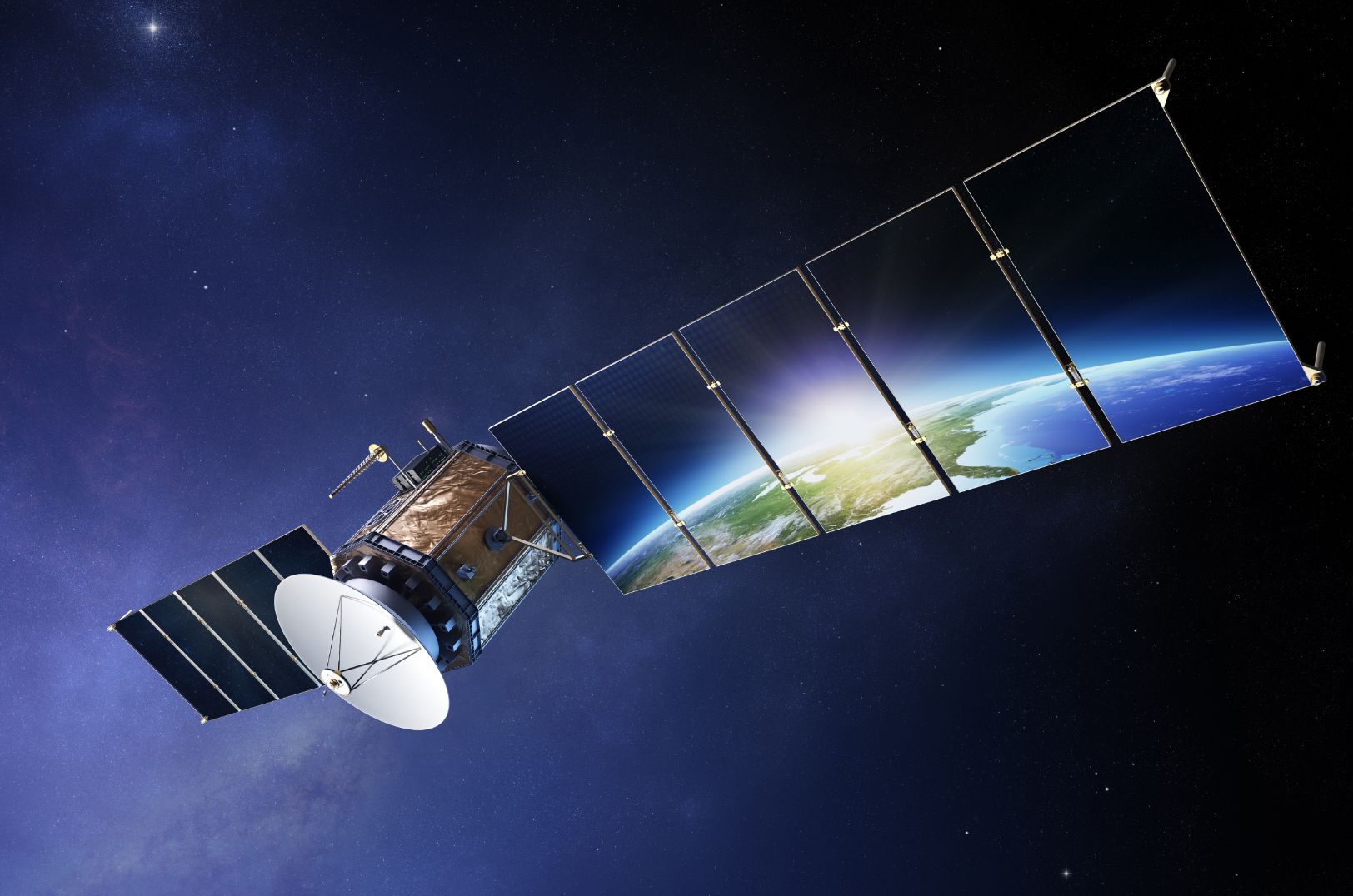
Where is the power? Innovation helps solid-state amplifiers challenge tube technology at higher frequencies
Amplifiers are a critical component in any long-range communications system. Positioned before the antenna, amplifiers boost the power of communications signals so they can be sent over long distances. Amplifiers are the most power-hungry component in RF communications systems, making them a key focus for performance optimisation in terms of linearity, power output and efficiency.
Tube versus semiconductor solutions
The original amplifier technology used in RF communication systems was the Travelling Wave Tube (TWTA). It is well established, reliable and still widely used – particularly in higher frequency, high-power applications. Travelling wave tubes are structurally complex, vacuum-based electronic devices that are complex and time-consuming to manufacture.
The challenger technology is the Solid-State Power Amplifier (SSPA). These semiconductor-based devices can be produced quickly and in high volumes, at dramatically lower cost than tube amplifiers. However, they have not traditionally been able to compete with TWTAs in higher frequency, high-power applications.
Displacing the incumbent technology
Over time, SSPAs have replaced TWTAs at the lower end of the frequency and power range. As new SSPA devices have been developed offering greater power, they have displaced TWTAs in increasingly higher frequency applications. Filtronic has been leading the way in SSPA innovation, developing increasingly powerful amplifiers that are able to operate in higher frequency bands.
Nevertheless, TWTAs remain unmatched at the highest frequencies and are the preferred technology for use in space applications for their superior power and efficiency. But SSPAs are catching up. Before we examine the latest developments in SSPA technology, let’s consider the pros and cons of each type of amplifier.
TWTA: high power, high efficiency, limited lifespan
Tube technology offers several advantages, principally high power combined with efficiency, particularly at higher frequencies. TWTAs are lightweight and have a compact footprint. On the downside, they are complicated devices that cannot be manufactured repeatedly at scale. They require stringent, precision alignment and vacuum sealing, meaning it can take months to manufacture a single tube. This complexity equates to cost. TWTAs also have a limited lifespan of around 50,000 to 100,000 hours. Output power gradually declines with age, and tubes can fail at any time without warning. When the tube fails, the signal path is immediately interrupted. Tube amplifiers also consume a lot of power, and their efficiency significantly decreases at lower output levels.
SSPA: increasing power, low cost, long lifespan
The significant benefits of solid-state amplifiers include reliability, low-cost, longevity and repeatability. SSPAs have a lifespan of up to a million hours. In Filtronic’s Cerus range of amplifiers because a single amplifier combines multiple MMIC devices, the failure of a single device only slightly reduces overall amplifier performance leading to graceful degradation rather than link failure. SSPAs typically offer much better linearity compared to TWTAs. They are also immediately operational, with no warm-up time required. The manufacturing time for SSPAs is dramatically shorter than for tube devices, and they can be produced reliably in volume. The disadvantages of SSPAs include size and weight. SSPAs are heavier and larger than tube amplifiers with comparable output power. The energy efficiency of SSPAs is also currently inferior to that of TWTAs.
Final frontier for SSPA technology
As SSPAs have replaced TWTAs in many applications, the final frontier for this semiconductor technology is space and satellite communications. Amplifiers used for satellite uplink applications must combine high power with high-frequency capabilities, which are difficult to achieve with SSPAs.
But this is where Filtronic is breaking new ground. With proprietary, ultra-low loss waveguide combining we are developing solid-state amplifiers capable of operating efficiently at mmWave frequencies while delivering the power requirements only previously possible with TWTA devices.
New developments extend SSPA capabilities
Our specialists have been able to achieve these advances in SSPA capabilities thanks to two key developments:
1. Semiconductor processes have become available that offer much higher power densities alongside higher frequency capabilities. Gallium Arsenide GaAs and Gallium nitride (GaN) semiconductors are leading the way here. At Filtronic, we have our own MMIC design capabilities, which means we can design devices specifically for the end application, to maximise performance. This has enabled us to develop the best-performing MMICs at E-band on the market.
2. We have developed proprietary technology for combining multiple devices into a single amplifier. Higher power density alone is not enough, since individual devices only deliver around 1-3W (depending upon the semiconductor technology) each at higher frequencies. Achieving the high power output required for satellite applications means combining multiple devices. Achieving the desired multiplier in output power requires very low-loss combining. Our novel combining technique has enabled us to achieve an SSPA at E-band that combines 32 devices into a single output producing the highest power 81-86GHz amplifier in the market. With a clear roadmap for further improvements.
To combine effectively, it’s vital to ensure that all the devices have similar phase performance and magnitude performance. Because we own the technology and produce many wafers, we can select similar devices from a wafer and screen them to assess their performance optimising the performance of the SSPA.
Growing demand for solid state amplifiers
SSPAs are in high demand due to their reliability, repeatability and long-life performance. Large numbers of SSPAs are used in telecommunications, for backhaul applications and base station to end user communications. In aerospace and defence, they are widely used in communications and radar systems.
In recent years, the launch of mega-constellations of satellites into Low Earth Orbit (LEO) has led to a huge increase in demand for powerful amplifiers to be supplied in volume. These new satellites are helping to deliver the full potential of 5G and provide high-speed connectivity to remote parts of the world. Previously, only a small number of amplifiers were required in space communications, to transmit and receive signals between ground stations and relatively few Geostationary Equatorial Orbit (GEO) and Medium Earth Orbit (MEO) satellites. Here, TWTAs provided the very high power required, while the high cost of these amplifiers only represented a small percentage of the overall satellite programme cost.
Now, with vast constellations of small satellites being launched, the market is becoming far more cost driven. The cost of each device becomes a significant factor when you need to equip 50,000 satellites at a time. Here, the low-cost, repeatable quality and reliable performance of SSPAs make them an attractive option.
Amplifiers for satellite payloads
For payload amplifiers located on the satellites themselves, SSPAs are making headway at lower frequencies. Space compatibility is an important consideration for these applications, where tolerance to radiation is vital. Size, weight and power are also critical, given the very high launch costs. SSPAs offer benefits over TWTAs for payload applications due to their longevity and the absence of mechanical, moving parts – making them more robust and better able to withstand shock and vibration. Thermal management is a challenge for SSPAs, however, due to the high power produced in a very small area. This becomes particularly problematic in space, where there is no airflow to dissipate heat.
Filtronic has projects underway to develop SSPAs with innovative thermal-management systems for satellite payload applications. We are initially working to develop these space-qualified solutions at Ka and Q-band with a roadmap to E -band.
Amplifiers for satellite uplinks
Satellite uplinks present different challenges. Communications from ground stations require far greater power, due to the amount of data being transmitted. This is where the benefits of TWTAs have traditionally outweighed those of SSPAs.
However, Filtronic is redressing that balance. We are now pioneering SSPA technology for applications above 45GHz. In these high-frequency bands, SSPAs have not previously been able to achieve the high power required to send signals into space. We have now developed an SSPA solution operating at 81-86GHz (E-band), which we are successfully supplying to the satellite ground station market. This amplifier is based on gallium arsenide (GaAs) semiconductors and gives around 20W of output power.
Our next step will be to develop a gallium nitride (GaN) amplifier with an 100W power output to operate at V-band (47.2-52.4GHz) frequencies. Concurrently, we are working on a GaAs amplifier to extend operations into even higher frequencies. Following this, we plan to advance our GaN amplifier capabilities for E-band applications and beyond, continuously pushing the limits of performance and frequency.
By developing high-power SSPAs for these high-frequency applications, we are delivering precisely the technology required by satellite ground stations – and creating SSPAs that can finally rival TWTAs at the higher end of the power scale.
What next for SSPAs?
The demand for data is growing exponentially worldwide. To accommodate this demand and sustain the required data levels, satellite communications need to use all available frequency bands and also move into less-crowded higher frequency bands.
As the industry moves up the frequency scale, semiconductors hold the key to developing reliable, repeatable amplifier technology. To meet demand, we need the technology at semiconductor level to deliver the fundamental power required from a single MMIC. As you move up the frequency range, integrating components becomes more challenging.
At Filtronic, we are applying our knowledge, expertise and resources to develop the increasingly high-powered SSPAs required for higher frequencies – helping the space sector keep pace with demand for more and faster data.